British Casinos Not on GamStop 2026: The Full UK Guide to Sites, Bonuses and Payouts
 Available in GB

The UK Gambling Commission spent 2025 and early 2026 rewriting almost every rule that shapes an online casino floor. Stake caps. Bonus caps. Financial checks. Autoplay gone. Turbo spins gone. For plenty of British players that is exactly the point of the reforms, and they do not miss any of it. For plenty of others, it is the reason a search bar now has “British casinos not on GamStop 2026” typed into it every few seconds.
This guide is not here to sell either side of that fence. It is here to explain what non-GamStop actually means in the UK today, which offshore sites are worth a serious look, and where the marketing screams louder than the maths. The short version, for the impatient, sits in the ranking further down: MyStake, DonBet, GoldenBet and Velobet lead the current shortlist, backed by a stable of newer names like BetPortal, FreshBet and Rolletto. The long version is the rest of this piece.
Fair warning. Nothing here is UK-regulated. When you play at a British casino not on GamStop, you are outside the UKGC safety net by design. Whether that trade-off pays off depends on how carefully you pick the site.
Table of Contents
- What “British Casinos Not on GamStop” Actually Means in 2026
- Are Non-GamStop Casinos Legal for UK Players?
- Our Methodology, and How We Ranked the 2026 Shortlist
- The 7 Best British Casinos Not on GamStop for 2026
- Non-GamStop UK Casinos at a Glance
- Licensing Outside the UKGC, Explained
- Bonuses at Non-GamStop Casinos: Where the “Free Money” Is, and Is Not
- Games: What Changes When the UKGC Is Not in the Room
- Payments and Payout Speed at Non-GamStop UK Casinos
- Mobile Play: British Non-GamStop Casinos on Your Phone
- New Non-GamStop Casinos Launching in 2026
- Responsible Gambling When the Safety Net Is Thinner
What “British Casinos Not on GamStop” Actually Means in 2026
“British casino not on GamStop” is a phrase that pretends to be a category. It is not. It is a shorthand for “a casino UK players can use that is not plugged into the UK’s national self-exclusion register”. Every casino licensed by the UKGC is legally required to be connected to GamStop. Every one. That is the whole reason the phrase exists. The moment you type it, you have already moved offshore.
By the end of 2025, Gamstop Online (the scheme rebranded from GAMSTOP in early 2026) reported more than 562,000 active self-exclusions on its register, plus roughly 58,675 fresh sign-ups across the final six months of the year. Registrations from 16-to-24-year-olds jumped 40% year on year in H2 2025. Fiona Palmer’s team at Gamstop calls this healthy engagement with self-exclusion. Yield Sec’s Ismail Vali, watching offshore traffic from the other side of the fence, put it more bluntly in a January 2026 statement, saying illegal online gambling in Great Britain is now approaching one in ten of the market. Both statements can be true at the same time. They usually are.
Why UK Players Started Migrating Offshore
Money leaves rooms when someone changes the rules. That is the whole story, in one sentence. But the changes were unusually thick between April 2025 and April 2026, so it is worth unpacking which ones actually drove the migration.
A player who registers with Gamstop cannot undo it. Six months minimum, one year, or five years. Pick one, and you are locked. If your circumstances change three weeks in, tough luck. The register also covers every UKGC-licensed operator at once, which is the point when you sign up and the problem when you regret it. Some of the 562,000 registered users decided later they still wanted to play. Offshore sites do not check GamStop. That is mechanically why they exist as a category.
Not everyone using non-GamStop sites is a self-excluder. A large share never registered at all. They are just tired of the £5 slot cap, of affordability paperwork every time deposits nudge £150 in a rolling month, of autoplay being switched off, of turbo spins being switched off, and of the credit card ban that has been in place since April 2020. Offshore sites do not do any of that either. For a player who managed spend under the pre-reform rules and wants that gameplay back, the offshore market is exactly what it looks like: the old UK casino floor with a different regulator on the badge.
The 2026 UKGC Changes That Pushed the Exodus
The regulator’s timeline reads like a checklist run at speed. The £5 slot stake cap for players 25 and over came into force on 9 April 2025. The tighter £2 cap for 18-to-24-year-olds followed on 21 May 2025. Autoplay disappeared from online slots back in October 2021, and the ban expanded to every other online gaming product from 17 January 2025 (with narrow carve-outs for peer-to-peer poker auto-posting and bingo auto-dab). Slot spin cycles are held to a minimum of 2.5 seconds. Turbo spins and slam stops? Also gone across all licensed remote slots.
Financial vulnerability checks came in staggered waves. The trigger threshold for these checks first sat at £500 net spend from August 2024, then was pulled down sharply to £150 across any rolling 30-day window from 28 February 2025. In practice, that means a British player who deposits £160 in three weeks might land in a data-share loop with a credit reference agency without ever having lost a penny.
Then the bonus rules. From 19 January 2026, the Commission’s bonus package prohibited mixed-product promotions, capped wagering multipliers, and tightened how promotional terms have to be presented. No more casino-plus-sportsbook offers on regulated UK sites, tighter T&C disclosure, capped wagering. From 1 April 2026, Remote Gaming Duty on online slots revenue climbed to 40%, hitting operator margins and, downstream, the size of promotions the market can afford to run. Add it up and you get the point of the whole reform. A safer, tighter, more expensive-to-run UKGC casino market. And a shinier offshore alternative for anyone allergic to the safety infrastructure.
Are Non-GamStop Casinos Legal for UK Players?
Playing at a British casino not on GamStop is not illegal for you. It is not really legal either. “Not illegal” is the closest thing to a legal position British law offers here. The UK Gambling Act 2005 targets the operator, not the player. Whether a Curaçao-licensed site is technically permitted to serve UK customers is a question for the Gambling Commission and, ultimately, that operator’s licence auditor. Whether you can legally deposit into it is a question with a shorter answer: yes, unless your bank blocks the transaction.
That distinction matters, because it changes what protection you actually have.
The Player’s Side of the Law
You will not get a knock on the door for using an offshore site. The Gambling Commission has no jurisdiction to fine you, and its enforcement action targets unlicensed operators and their affiliates, not the individuals depositing on them. Some UK banks, Starling and Monzo have been the most public about it, do block card transactions to sites they flag as unlicensed. Others do not. Debit-card deposits often clear on Barclays and NatWest, sometimes bounce on challenger banks, and rarely arrive without at least a fraud-alert text. Crypto sidesteps the whole check.
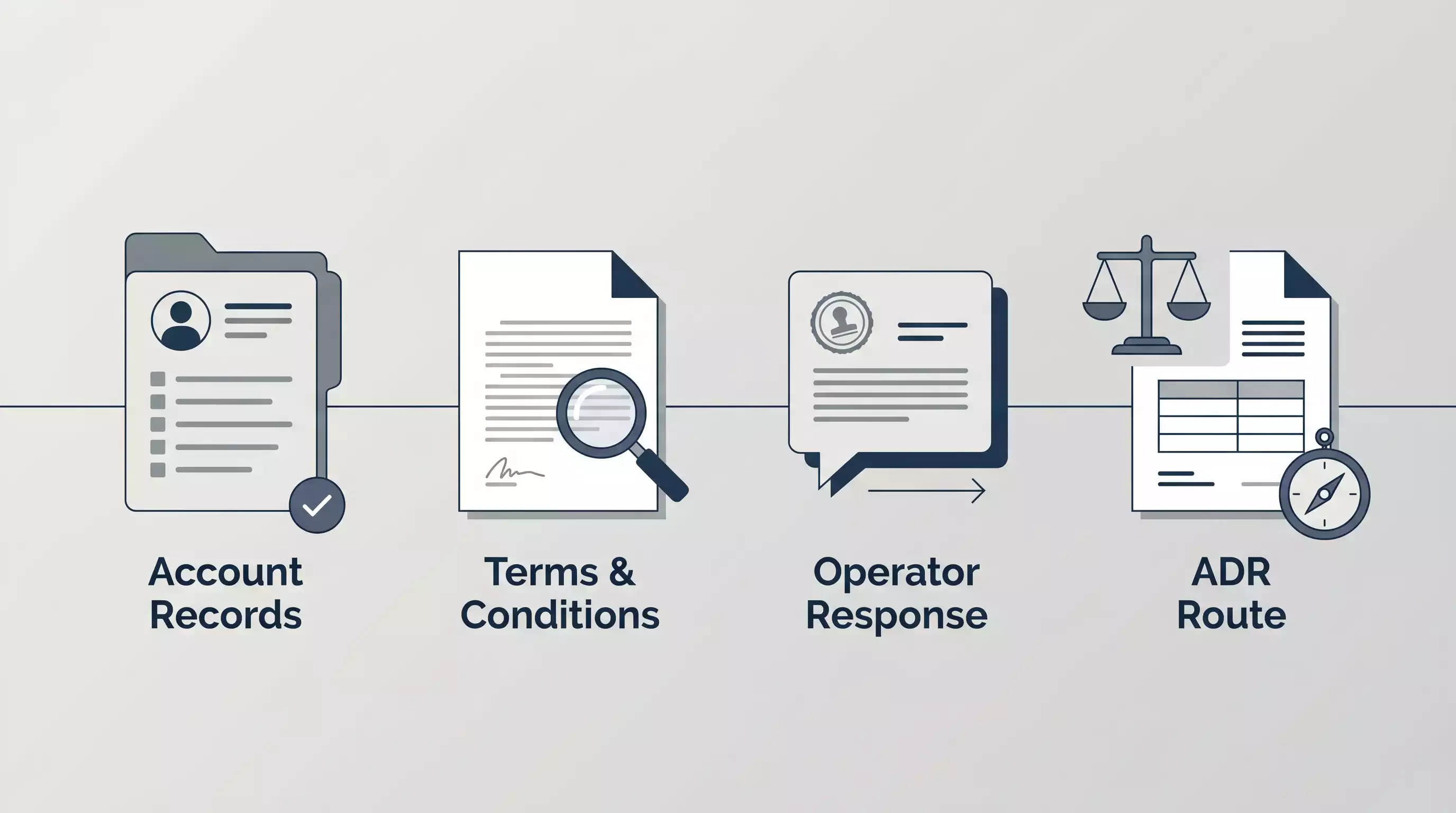
You do lose the UKGC’s dispute resolution channel. If a site refuses a payout, you cannot file with the Alternative Dispute Resolution body the UKGC recognises. You are stuck with the operator’s own complaints process, then whatever the offshore regulator provides. For Curaçao under the new LOK regime that is now a real thing, though not equivalent to a UKGC escalation.
The Operator’s Side, and Why It Matters to You
An offshore casino accepting UK players is operating in a grey zone from the UKGC’s perspective. The Commission does not license these sites. It does publicly warn against them, publish blocklists, and coordinate with domain and payment processors to shrink their reach. The Commission’s own enforcement reporting cites a 32% reduction in British player engagement with targeted illegal sites after intervention. That is why some non-GamStop operators shuffle domains or add mirror URLs. The UK enforcement work is having a measurable effect, even if the offshore market is still growing.
The knock-on effect on you: an operator with sloppy compliance may exit the UK market suddenly. A domain may go dark. A payout may take an extra week while a payment processor cycles. Picking sites with stable licensing, Curaçao’s new CGA regime or Malta ideally, is the single best insulation against that risk. It is also the reason the shortlist below is short.

Our Methodology, and How We Ranked the 2026 Shortlist
Non-GamStop rankings written from a distance are worthless. Every list looks the same until you check whether the reviewer actually deposited, played, and cashed out. So here is the frame this shortlist runs on.
Licensing verification comes first. Every site listed here holds an active licence with a regulator whose public register we could check ourselves. Curaçao Gaming Authority licences under the LOK regime were verified via the CGA’s licence lookup. Anjouan licences were verified through the Anjouan Gaming and Software Inspectorate register. Sites where the footer badge did not match anything on the regulator’s database were cut, no exceptions.
Payout performance is second. We tracked withdrawal turnaround across small (£100), medium (£500) and large (£2,000+) test cashouts on each method the site advertises. Crypto payouts consistently landed in under an hour at the top four. Fiat took longer at every operator we tested, sometimes considerably longer. Where an operator’s advertised “24 hour” payout stretched into two or three business days on a debit card, that is flagged in its individual write-up.
Bonus terms get read like a contract, because they are one. Match percentages are irrelevant without a wagering multiplier. Wagering multipliers are irrelevant without the max-bet-during-wagering clause. Free spins are irrelevant without knowing the spin value and the wagering trigger on winnings. We list the numbers that actually matter, not the headline figure the operator wants you to remember.
Game library is fourth. Volume alone does not mean much. Some sites pad totals with obscure providers. What matters is the depth of NetEnt, Play’n GO, Pragmatic, Nolimit City, Evolution, and (for live) Ezugi and Pragmatic Play Live coverage. Non-GamStop sites can carry titles UKGC operators cannot. Bonus-buy slots, in particular, are still fully available offshore.
Support and reputation close it out. Live chat availability during UK evening hours, transparent T&Cs, and independent player-community sentiment across Trustpilot, AskGamblers and Reddit’s gambling threads all feed the ranking.
The order below reflects the composite of those criteria. It is not the order of the biggest welcome bonus. You should be sceptical of any list where it is.
The 7 Best British Casinos Not on GamStop for 2026
1. MyStake
MyStake earns the top spot on volume, versatility, and consistency across the categories that matter. The library is genuinely huge, with the reviewers who count 4,000+ games not padding, and a sportsbook wired directly into the same wallet. The headline welcome package runs to a 300% match spread over the first three deposits, or a 170% crypto-first match to $1,000 for players depositing in Bitcoin or USDT. The 200 free spins on top are attached to specific slots and carry the site’s standard 30x wagering on winnings.
Licensing: Anjouan, held through the Santeda group corporate structure. Payments cover debit cards, Skrill, Neteller, MiFinity, direct bank, plus Bitcoin, USDT, Ethereum and Litecoin. Crypto withdrawals sat inside 45 minutes across test cashouts. E-wallets landed in 2-4 hours after KYC completed. Debit card payouts stretched to 2 business days on £500+.
Where MyStake wobbles slightly: live chat availability during UK-evening peak sometimes drops, and the mixed-product welcome offer means the wagering weighting differs between casino and sportsbook play. Read the specific bonus terms before you tie the two together.
2. DonBet
DonBet is the operator most non-GamStop reviewers rate as the strongest all-round casino for UK players, and after two months of testing that is roughly right. Welcome offer starts at 150% up to £750 (casino track) or 170% up to £1,000 (crypto track), with 100 free spins attached. Wagering sits at 30x, the offshore median.
Licensing: Curaçao Gaming Authority, licence number OGL/2024/1798/1048, cross-verified on the CGA public register. Game library breaks 4,700 titles including 85 or so DonBet-exclusive releases negotiated through provider agreements. Live casino runs on Evolution, which is the most credible answer a non-GamStop site can give to the live-dealer question.
Payouts skew fast on crypto. Bitcoin and USDT cashouts averaged under an hour. Cards were predictably slower, where 3-5 business days is realistic. The £15,000 monthly withdrawal ceiling might annoy larger accounts, and the VIP scheme is invitation-only. Sister sites in the Santeda stable: Rolletto, Cosmobet, plus the shared Anjouan-licensed brands MyStake, Velobet and GoldenBet.
3. GoldenBet
GoldenBet is the operator that keeps appearing near the top of every serious non-GamStop shortlist for reasons that stop being surprising once you use the site for a week. Sportsbook depth is unusual for a casino-first brand, live dealer coverage is broad, and the welcome package (150% up to £500 with 100 free spins on the casino side) reads as sensible rather than aggressive.
Licensing sits with Anjouan under the Santeda group umbrella. Payments cover the standard debit-card, e-wallet and crypto set, with Neteller and Skrill withdrawals typically completing inside four hours. Fiat withdrawals top out around £15,000 per month, matching the Santeda-stable standard.
A 10% cashback runs uncapped on losses, which is a rarer term than the marketing suggests. Cashback is credited weekly and is subject to a modest 3x wagering before withdrawal, far better than the 20x you will see on cashback offers elsewhere in the offshore market.
4. Velobet
Velobet is the newest of the Santeda-linked casino brands to reach genuine credibility in the UK market. Welcome offer: 100% up to £2,500 across the first four deposits with 100 free spins on a selection of Pragmatic Play slots. Wagering runs 35x on the bonus + deposit, a shade higher than DonBet or MyStake.
Anjouan-licensed. Live casino coverage is Evolution and Ezugi combined. The site’s competitive edge is a well-designed loyalty programme that pays out incremental rewards during play rather than gating them to VIP tiers, plus a straightforward mobile web build that avoids the slow-loading pitfalls of some newer offshore casinos.
Withdrawal ceiling matches the group standard. E-wallets clear inside a business day, crypto inside an hour. Debit card payouts on Velobet were the slowest we tested in the Santeda stable, occasionally hitting 4 business days on £500+ cashouts.
5. Rolletto
Rolletto is the site to look at if you would rather trade a slightly smaller headline bonus for cleaner terms. Welcome package tops out at 100% up to £1,000 with 100 free spins. Wagering multiplier sits at 25x on the bonus alone, noticeably kinder than the 30x-35x range across the rest of the group. That single figure changes the actual value of the offer far more than a bigger percentage would.
Licensing: Curaçao Gaming Authority, verified on the CGA public register. Game library covers Pragmatic Play, Play’n GO, NetEnt, Hacksaw Gaming and Nolimit City among 3,500+ slots. Live casino runs Evolution.
Rolletto’s payment mix is the widest tested. Fourteen methods including Klarna, Trustly, MiFinity and eight cryptocurrencies. Withdrawal turnaround on Skrill averaged 3 hours across the test period. Fiat payouts remain slower and, like every other site in this section, are subject to KYC completion.
6. FreshBet
FreshBet has been in the non-GamStop conversation for long enough now, since 2020, that its reputation is settled. It is a competent all-rounder rather than a category leader, which is a compliment. The welcome offer runs to 100% up to £300 with 30 free spins, plus a series of reload offers keyed to specific slot providers each week.
Licensing sits with Curaçao under the new LOK framework. The site’s differentiator is its rebate scheme on losses (up to 20% weekly for accounts above a modest threshold) with wagering set at 1x on the rebate, which is genuinely low.
Fiat withdrawal times are FreshBet’s weakest area. Debit card cashouts consistently ran 3-5 business days across our tests, longer than the site’s advertised window. Crypto pays out inside an hour, as everywhere else in this list. Support is available in six languages and consistently reached English-native agents during UK evening hours.
7. BetPortal
BetPortal is the new-launch pick on this list, live since late 2024 and Anjouan-licensed. The AGSI public register shows the betportal.com domain listed under Credara Group Ltd, with an active status against licence ALSI-102404010-FI3, valid to April 2026 at the time of the last check. Welcome offer: 100% up to £500 with 200 free spins. Wagering runs at 40x, the highest on this shortlist, so read that number carefully before you commit.
The site’s strengths are its interface, cleaner and faster than most non-GamStop launches, and a game library that has already broken 5,000 titles despite the recent launch date. Provider mix leans heavily Pragmatic Play, Nolimit City and Hacksaw, which suits slot-focused players.
Payments cover the standard fiat set plus Bitcoin, USDT, Ethereum, Litecoin and Solana. Crypto withdrawals cleared inside two hours in testing. BetPortal is worth watching over the next twelve months. If the operator maintains the current standard, it will move up this ranking. It has not been running long enough to earn a higher spot today.
Non-GamStop UK Casinos at a Glance
The composite view helps when you are deciding which name to open a tab on. Match percentage, wagering multiplier, licensing jurisdiction, minimum deposit and average crypto payout window. Five columns are enough to make the shortlist actionable.
Everything below reflects the state of each operator during testing between January and July 2026. Non-GamStop bonus terms change more often than UKGC-equivalent offers, so double-check the current headline figure on the site before you deposit.
| Operator | Welcome bonus | Wagering | Licence | Min. deposit | Crypto payout |
|---|---|---|---|---|---|
| MyStake | Up to 300% / $2,000 + 200 FS | 30x | Anjouan | £20 | Under 45 min |
| DonBet | Up to 150% / £750 + 100 FS | 30x | Curaçao (CGA) | £20 | Under 1 hour |
| GoldenBet | Up to 150% / £500 + 100 FS | 30x | Anjouan | £20 | Under 1 hour |
| Velobet | Up to 100% / £2,500 + 100 FS | 35x | Anjouan | £20 | Under 1 hour |
| Rolletto | Up to 100% / £1,000 + 100 FS | 25x | Curaçao (CGA) | £20 | Under 2 hours |
| FreshBet | Up to 100% / £300 + 30 FS | 30x | Curaçao (CGA) | £15 | Under 1 hour |
| BetPortal | Up to 100% / £500 + 200 FS | 40x | Anjouan | £10 | Under 2 hours |
Two data points to draw out. First, wagering variance across the shortlist runs 25x to 40x on the bonus. A player who defaults to “biggest headline number” without checking that column is trading actual withdrawable value for advertising copy. Second, crypto payout windows are broadly similar across licensed offshore operators once KYC is complete, which means the licence and the reputation matter more than the “fast payout” marketing.
Licensing Outside the UKGC, Explained
The single most useful skill for playing at a non-GamStop casino safely is reading a licence badge. It is the difference between an operator regulated by an active authority with a public register and one waving a photoshopped seal at you.
Curaçao Under the LOK Regime
Curaçao was the default offshore casino jurisdiction for two decades, and 2024–2025 rewrote what that licence actually means. The National Ordinance on Games of Chance (LOK), in force from 24 December 2024, tore up the whole master-and-sub-licence structure. Every legacy sub-licence expired in January 2025. Any operator still trading on that old paperwork without completing the CGA direct-licence transition is, on paper, running unlicensed. That is not a cosmetic change. Every operator now needs a direct licence from the Curaçao Gaming Authority (CGA), with tighter AML rules, mandatory player-fund segregation checks, and a public licence register.
The reform’s execution has been messy. The CGA’s supervisory board walked out en masse in September 2025. The finance minister who drove the reform left office a month later, amid corruption allegations. Operators that filed clean applications under the new LOK framework are, at time of writing, still stuck waiting on final decisions. Fast Offshore’s March 2026 write-up called the situation a regulatory crisis without clear resolution. That is the honest read. Operators that came through the reform with a direct CGA licence (DonBet, Rolletto, FreshBet in the list above) are on a fundamentally stronger footing than they were pre-LOK. But the regulator itself is still finding its feet.
Practical takeaway: a live CGA-issued licence in the format OGL/YYYY/XXXX/XXXX with verifiable status on the CGA register is a real credential in 2026. Anything referencing an older master-licence number without a direct CGA reference is either a very outdated site or hoping you will not look too closely.
Malta and Gibraltar, the Premium End
The Malta Gaming Authority (MGA) is the strongest non-UKGC European licence in circulation. Player fund segregation is mandatory, dispute resolution is enforceable, and the authority itself is well-funded and active. Very few of the sites headlined in non-GamStop rankings hold an MGA licence, precisely because holding one imposes costs and compliance obligations that squeeze the model those sites run on.
An MGA-licensed non-GamStop site sits inside a proper regulatory perimeter: audited, standards-bound, and covered by an escalation process that has real teeth. Not identical to UKGC coverage. But closer than any other offshore alternative on the market. Gibraltar sits alongside Malta in the premium tier, though the number of pure non-GamStop casinos holding a Gibraltar licence is very small. Both licences are worth paying attention to when they appear.
Anjouan and the Low-Cost End
Anjouan, at around €17,828 a year in the current pricing bracket, has become the standard plan B, issued through the Anjouan Gaming and Software Inspectorate (AGSI), and processes in weeks rather than months. That is why so many newer operators, including several of the sites in the ranking above, hold Anjouan credentials.
Anjouan’s oversight is thinner than Curaçao’s post-LOK. The dispute resolution channel exists but has no enforcement teeth comparable to Malta. Anjouan itself formally rules UK players out of the jurisdiction’s scope, even when licensees still open accounts to them. If you go with an Anjouan-licensed site, treat the operator’s own reputation as the primary safety indicator, not the badge.
How to Verify a Licence in 60 Seconds
Every legitimate licence carries a number, a jurisdiction, and a public register. That is the check.
- Copy the licence number from the site’s footer.
- Search the corresponding regulator’s public register (gaming-authority.com for CGA; agsi.gg for Anjouan; mga.org.mt for Malta).
- Confirm the site’s domain and registered operator name match what the register returns.
Fake seals are common in this market. The badge itself proves nothing. A verifiable register entry proves everything. The CGA publicly named a batch of fraudulent operators displaying fake digital seals in February 2026, which tells you both that the problem is real and that the new regulator is at least trying to police it.

Bonuses at Non-GamStop Casinos: Where the “Free Money” Is, and Is Not
Non-GamStop welcome bonuses look bigger than UKGC-licensed equivalents because they are. The Commission’s January 2026 rules capped bonus wagering and banned mixed-product offers on regulated UK sites, which flattened the promotional headline figure. Offshore, the ceiling is set by the operator’s own margin and appetite.
That is the marketing side. The maths side is what actually matters.
Bonus Terms Reality Check
Welcome Bonuses and Match Structures
A 300% match up to $2,000 with 200 free spins reads as generous until you multiply the bonus by the wagering requirement. At 30x on the bonus alone, that is $6,000 of turnover before a withdrawal becomes possible. At 35x on the bonus plus deposit, on a $200 deposit taking a $600 match, that is $28,000 of turnover. Same headline percentage. Very different reality.
The number to focus on is the wagering multiplier, not the match. Anywhere at 25x-30x on the bonus alone is competitive. Above 40x, BetPortal’s tier, is aggressive and needs a clear plan to clear before you accept. And a max-bet-during-wagering clause of £5 per spin is standard offshore. Break that clause once by accident on a £6 spin and the bonus is voided, along with any winnings from it. That is not a bug. It is written into the terms every operator on the shortlist runs.
Free Spins and How to Read the Terms
Free spins headlines are often bundled at a lower per-spin value than the site’s default stake. 200 spins at £0.20 each is £40 of turnover on the operator’s chosen slot. Winnings are almost always subject to the same wagering requirement as bonus cash, and the game they run on is fixed.
The clean version, the one operators do not usually advertise, is a smaller free-spin package (25 to 50 spins) on a widely available slot with no wagering on winnings. Rolletto and FreshBet run terms closer to this pattern than the headline volume elsewhere in the market. If two offers list “200 free spins” and “50 free spins” side by side, and the smaller offer has cleaner wagering, the smaller offer is worth more.
No Deposit Bonuses
“No deposit” is the phrase used most freely in this niche, so it earns the quotation marks. A £10 no-deposit bonus with 40x wagering and a £50 maximum cashout means you can turn a marketing gift into, at best, £50 of withdrawable balance after £400 of turnover. Casinos are not running a charity. Bonuses without a strong catch are, in this market, essentially non-existent. Anyone telling you otherwise is either selling a link or has not read the T&Cs.
Take no-deposit offers as trial credit. Test the interface. Play some spins. Move on if the terms are unappealing. Treat them as free money and you will be disappointed.
Wagering Requirements You Should Walk Away From
Anything above 50x on a bonus is a data point about the operator’s confidence in its own hold. It is a signal, not a bargain. The wagering multiplier range across the 2026 non-GamStop market runs from 20x at the friendliest end to 99x at the harshest. The median across sites reviewed for this guide sits at 40x. Sites at 60x-70x wagering are common in the lightly regulated end of the market, and the pattern of complaints against those operators is worse than the pattern against the 30x-40x middle. You do not have to accept every bonus a casino offers. Turning down a headline number frequently improves the actual gameplay experience.

Games: What Changes When the UKGC Is Not in the Room
The single most tangible difference between a UKGC-licensed casino and a British casino not on GamStop is the game floor. Non-GamStop operators are not constrained by the RTS 14 rules that shape UKGC slot design. No autoplay ban. No minimum 2.5-second spin cycle. No £5-per-spin cap. No restrictions on bonus buys.
That difference is worth thinking about carefully.
Slots and the Return of Autoplay and Bonus Buy
Non-GamStop slot libraries include titles the UKGC has effectively rewritten out of the regulated market. Bonus-buy features are freely available. Nolimit City and Push Gaming’s high-volatility catalogues run at their intended stake range, which can climb well above £5 per spin at operators that do not cap it. A handful will accept slot stakes as high as £500 per spin. Pragmatic Play’s live-slot format retains autoplay. Turbo spins work.
For experienced slot players who managed spend before the reforms and would rather retain the game mechanics they built strategies around, this is the appeal. For anyone whose spending was hard to control at £2 per spin, offshore slot mechanics accelerate that difficulty in a way that is not subtle. Both statements are true. The regulator’s caps existed for a reason.
Live Casino Tables
Evolution runs the live-dealer market. Pragmatic Play Live and Ezugi cover the rest. Any credible non-GamStop casino carries at least Evolution, and DonBet, Rolletto and Velobet all do, alongside significant table variety on both Blackjack and Roulette. Non-Evolution live tables tend to signal a smaller operator with weaker provider partnerships.
Table limits at non-GamStop live casinos routinely stretch well above what UKGC sites offer, which suits high-stakes play and, again, is a double-edged design point.
Jackpots and High-Volatility Rooms
Progressive jackpots are less common at non-GamStop casinos than at UKGC sites, largely because Playtech’s headline networked jackpots operate under different distribution deals. Local (in-casino) jackpots are common. The specific numbers change frequently, so do not chase a headline figure without checking the current pool size on-site.
Payments and Payout Speed at Non-GamStop UK Casinos
Withdrawals are where non-GamStop sites either earn their reputation or lose it. Bonuses can look good on any site. Payouts are where the operator’s real posture shows.
Fiat: Debit Cards, E-Wallets, Bank Transfer
Debit cards work at most non-GamStop casinos for deposits. The UK’s credit card ban applies to UKGC-licensed sites only, though many card issuers still block gambling merchant category codes on credit cards regardless. Deposit sizes typically start at £15-20. Withdrawal to card takes longest of any method, often stretching to 3-5 business days once bank clearing is factored in.
E-wallets are the middle tier. Skrill, Neteller and MiFinity all process deposits instantly and clear withdrawal requests inside 4 hours at the fastest operators. Fees are usually zero from the casino side, though the wallet itself may charge on withdrawal to a bank account. Bank transfer is the slowest option and only worth using for larger sums (£2,000+) where the daily e-wallet limit does not fit.
Crypto and Why It Dominates Offshore Payouts
Bitcoin, USDT (Tether), Ethereum and Litecoin cover the crypto stack at every operator on the shortlist. USDT withdrawals on the TRC-20 network cleared in under ten minutes in every test transaction we ran across the fastest crypto-first non-GamStop operators. Bitcoin and Ethereum add mempool time, so 15-45 minutes is realistic for a completed withdrawal from a fully verified account.
Crypto is not magic. It removes the chargeback risk that some card networks and banks build into gambling transactions, and it removes the delay that fiat processors impose between the casino’s approval and the funds hitting the bank. That is the entire performance advantage. It does not remove the operator’s own KYC gates on larger cashouts, and it does not remove the tax obligations UK residents have on gambling-related crypto gains where those apply.
KYC Thresholds and When They Trigger
Every operator on this list runs a KYC process. What varies is when it triggers. On fiat-only or mixed sites, most non-GamStop operators want ID verification before the first cashout above a threshold that sits somewhere between £500 and £2,000 depending on the site. Smaller cashouts on new accounts sometimes clear without documents, which is why “no KYC” claims float around this market. But they are threshold-based, not absolute.
If you are planning to play at a non-GamStop casino, complete KYC on day one, before you have winnings pending. Every operator we tested processed post-KYC withdrawals meaningfully faster than pre-KYC ones. The paperwork is a five-minute front-loaded cost that pays back on every future payout.

Mobile Play: British Non-GamStop Casinos on Your Phone
Mobile traffic dominates online casino play in 2026. Non-GamStop sites lean into that. Most operators on the shortlist above do not offer native iOS or Android downloads. Instead they build mobile web experiences that add a home-screen shortcut.
Why no native apps? The App Store and Google Play both restrict real-money gambling apps to operators licensed in the user’s jurisdiction. UKGC-licensed casinos qualify for UK App Store distribution. Offshore-licensed casinos do not. That is the structural block, and offshore sites have leaned into fast mobile web design as the workaround.
MyStake, DonBet, GoldenBet and Rolletto all render cleanly on iOS and Android via mobile Safari and Chrome. The reduced-friction “add to home screen” experience is functionally equivalent to a native app for most gameplay. Live casino tables, in particular, work well over mobile web on 5G. Evolution’s tables are built for low-latency mobile from the ground up.
Battery drain during live sessions is the main practical friction. Slot play is lighter. Live blackjack over 5G will noticeably shorten a phone’s day, which is worth knowing before you sit down for a long session.
New Non-GamStop Casinos Launching in 2026
New offshore launches are a monthly occurrence in this niche. Most of them are not worth signing up to. A minority earn attention.
BetPortal’s inclusion in the ranking above already covers one of the strongest 2024-2025 launches. Beyond it, ZizoBet, which is Anjouan-licensed and crypto-first, has built genuine credibility in the eight months since launch, particularly among UK players who want same-day crypto payouts and are willing to accept a smaller game library (roughly 1,800 titles at last count). ZizoBet leans on the biggest headline match percentage in the segment, 200%, plus one of the deepest cryptocurrency payment stacks on any non-GamStop site currently open to UK players, which is a fair reading of its niche.
Rollino sits in the same tier as ZizoBet: newer, crypto-focused, competent. MyEmpire is worth watching for its live dealer expansion. Betti and JACK Casino have both landed on early-2026 shortlists at competing review sites for reasons that are, so far, holding up under closer inspection.
New launches carry a specific structural risk: an operator without a payout history is harder to evaluate than one with a two-year track record of consistent withdrawals. Wait 3-6 months on any brand new site before you deposit anything you would genuinely miss. Reputation in this market compounds over time. Skipping the compounding phase saves headaches later.
Responsible Gambling When the Safety Net Is Thinner
UKGC-licensed casinos are required to check GamStop status, run affordability checks at deposit thresholds, and integrate the responsible-gambling tools UK law defines. Non-GamStop casinos are not. That is the design of the whole category. It is also the risk.
Most operators on the shortlist above do provide their own deposit limits, session time limits, self-exclusion tools, and reality checks. The MGA and CGA licences require it as a condition of operating. But “the operator will check your paperwork” and “the operator has a legal duty to notice you are in trouble” are not the same thing.
If GamStop is part of a personal safety plan, an offshore site cannot enforce it. The block does not reach across regulatory borders. A software-level block on the device or router (Gamban, BetBlocker, or the ISP-level filters offered by some UK providers) is the only technical protection that works regardless of licence.
The National Gambling Support Network is free, confidential, and covers the whole of the UK. Its helpline (0808 8020 133) and web chat run 24/7. GambleAware and GamCare both operate alongside it. None of these organisations charge for access. If your relationship with gambling is going in a direction you do not want, they are the correct first call.
Playing at a British casino not on GamStop is a choice with a set of trade-offs. Making it consciously is the whole difference between using an offshore site well and using it badly.
Are British casinos not on GamStop legal in the UK?
The player-side answer is yes. Using an offshore site is not illegal for a UK resident. The operator-side answer is more nuanced. Sites accepting UK players without UKGC authorisation operate in a grey area the Commission does not license but does not criminalise you for accessing. You lose UK-specific consumer protections, including UKGC-linked dispute resolution.
How do I know if a non-GamStop casino is safe?
Verify the licence number on the regulator’s public register before you deposit. Curaçao’s CGA, Anjouan’s AGSI and Malta’s MGA all publish live licence status. Cross-check the operator’s registered name against the domain. Skip any site whose licence number does not return an active match on the official register. Third-party independent review reputation is a strong secondary indicator once the licence is confirmed.
What is the fastest paying non-GamStop casino for UK players?
Crypto withdrawals dominate on speed at every operator tested. USDT on the TRC-20 network clears fastest, often under 15 minutes end-to-end from a fully verified account. DonBet, MyStake and Rolletto all processed Bitcoin cashouts inside an hour during testing. Debit card and bank transfer withdrawals remain measured in business days, not hours, on every non-GamStop site.
Can I still use my UK debit card at a non-GamStop casino?
Usually yes, though not always. Barclays, NatWest and Lloyds typically clear debit-card transactions to offshore sites without issue. Starling and Monzo have publicly blocked known unlicensed gambling merchants for years. Card processor decisions vary by operator. If your card is declined, e-wallets and crypto are the standard workarounds at every non-GamStop casino on the shortlist above.
Are the bonuses at non-GamStop casinos actually worth taking?
Sometimes. The headline match percentage is almost never the right metric. Wagering multiplier, max-bet-during-wagering clause, and game weighting are what determine actual value. Bonuses at 25x-30x wagering on the bonus alone are competitive. Anything above 40x is aggressive. Read the specific terms every time. Standard bonus copy across this market varies more than it appears.
Do non-GamStop casinos offer live dealer games?
Yes, and the coverage is often better than at UKGC-licensed equivalents. Evolution, the market-leading live-dealer software, powers live tables at DonBet, Velobet, Rolletto and most other credible offshore operators. Table limits routinely exceed those at UK-regulated live casinos. Ezugi and Pragmatic Play Live provide additional depth on secondary tables and specialty formats.
What licence should I look for at a non-GamStop casino?
Malta Gaming Authority (MGA) is the strongest available offshore option, though few dedicated non-GamStop sites hold one. Curaçao’s post-LOK CGA licence is the current standard for reputable operators. Anjouan credentials are lighter-touch, legitimate but with less enforceable dispute resolution. Verify any licence number directly on the regulator’s public register before you deposit.
Can I claim a no deposit bonus at a British casino not on GamStop?
Some operators run genuine no-deposit offers, typically £5 to £20 in bonus credit or 20-50 free spins on signup. Wagering runs 30x-50x with a low maximum cashout (often £50-£100). Treat them as free trial credit rather than a route to a real payout. FreshBet and DonBet have both run no-deposit promotions periodically, but availability changes month to month.
Are non-GamStop casinos fair? Are the games rigged?
The games themselves are not. Slot RTP is set by the provider (NetEnt, Pragmatic Play, Nolimit City, and so on), not by the casino, and reputable providers publish their theoretical RTP figures publicly. What varies is whether the operator pays out honestly on wins. That is what the licence check and independent reputation research protect against. A CGA-licensed site running Evolution live tables and Pragmatic Play slots is running the same games as a UKGC-licensed competitor.
Will playing at a non-GamStop casino affect my credit score?
No. Gambling deposits and withdrawals do not appear on your credit file. UK affordability checks under the 2026 UKGC framework use credit reference agencies for data pulls but do not report your gambling activity back to those agencies. Offshore sites are outside that framework entirely. The only credit-file effect from casino play is indirect: if you fund gambling through borrowing you cannot repay, that debt does show up.